Table of Contents
ToggleCamera movement has always been one of the most important tools in filmmaking. A simple push-in shot can create tension, a slow tracking movement can reveal a character’s environment, and a carefully planned camera path can make a scene feel more immersive.
Traditionally, creating cinematic camera movements required detailed planning, experienced cinematographers, camera equipment, and controlled production environments. Filmmakers needed to decide camera placement, lens choices, movement speed, and how each shot connected with the overall story.
AI is changing how filmmakers approach this process. Instead of only being used for generating visuals, AI tools are becoming part of the pre-production and creative development process. They help filmmakers explore camera ideas, test shot compositions, and plan cinematic movements before production begins.
The goal is not to replace cinematography decisions but to give filmmakers more ways to visualize and refine their creative ideas.
Why Camera Movement Matters in Filmmaking
Camera movement is not just a technical choice. It affects how audiences experience a story.
A static shot can create a feeling of stability or observation, while movement can guide attention and create emotion.
Different camera movements communicate different storytelling choices:
- A slow dolly movement can build anticipation
- A tracking shot can follow a character’s journey
- A crane movement can reveal scale and environment
- A handheld movement can create realism and urgency
- A smooth orbit shot can highlight a product or subject
Before filming begins, directors and cinematographers need to understand how these movements support the story.
AI tools are helping filmmakers explore these decisions earlier in the creative process.
How AI Helps With Camera Planning Before Production
One of the biggest advantages of AI in filmmaking is the ability to visualize ideas before a camera is physically placed on set.
During pre-production, filmmakers often create shot lists, storyboards, and visual references to understand how scenes should look.
AI-assisted workflows can help expand this process by allowing creators to experiment with:
- Camera angles
- Movement paths
- Scene composition
- Framing choices
- Visual styles
For example, a director planning a dramatic product reveal can test different camera approaches before filming. They can explore whether a slow zoom, rotating camera movement, or tracking shot better communicates the intended feeling.
This allows creative decisions to be made earlier and reduces uncertainty during production.
Using AI to Create More Detailed Shot Concepts
A cinematic scene usually starts with an idea rather than a final shot.
A filmmaker may imagine a character walking through a city, a camera following a vehicle through a landscape, or a product being revealed through a carefully controlled movement.
AI tools can help transform these ideas into more detailed visual concepts.
Instead of only describing a shot in words, filmmakers can develop references that show:
- Where the camera starts
- How it moves
- What the audience sees
- How the subject interacts with the environment
This helps directors communicate their vision more clearly with production teams.
AI-Assisted Shot Development and Visual Planning
Creating cinematic camera movements requires understanding how different shots connect together. A single impressive shot is not enough. The movement needs to support the larger sequence.
AI-assisted shot development helps filmmakers explore complete visual ideas rather than isolated frames.
Invideo Agent supports this type of workflow by helping creators move from concepts, scripts, and references into structured video projects. During shot development, this kind of connected workflow can help filmmakers organize visual ideas, plan scenes, and refine creative direction before moving into final production.
For example, a filmmaker developing a short action sequence can explore different scene structures, camera approaches, and visual styles while keeping the overall creative direction connected.
With invideo Agent Two, more complex projects can benefit from workflows that maintain project context across multiple creative decisions, helping teams manage larger productions where consistency between scenes, references, and visual direction matters.
Creating Dynamic Camera Movements With AI Video Tools
AI video tools are improving the way filmmakers experiment with motion.
Instead of generating only static images, modern AI systems can create moving sequences with camera changes, subject motion, and environmental interaction.
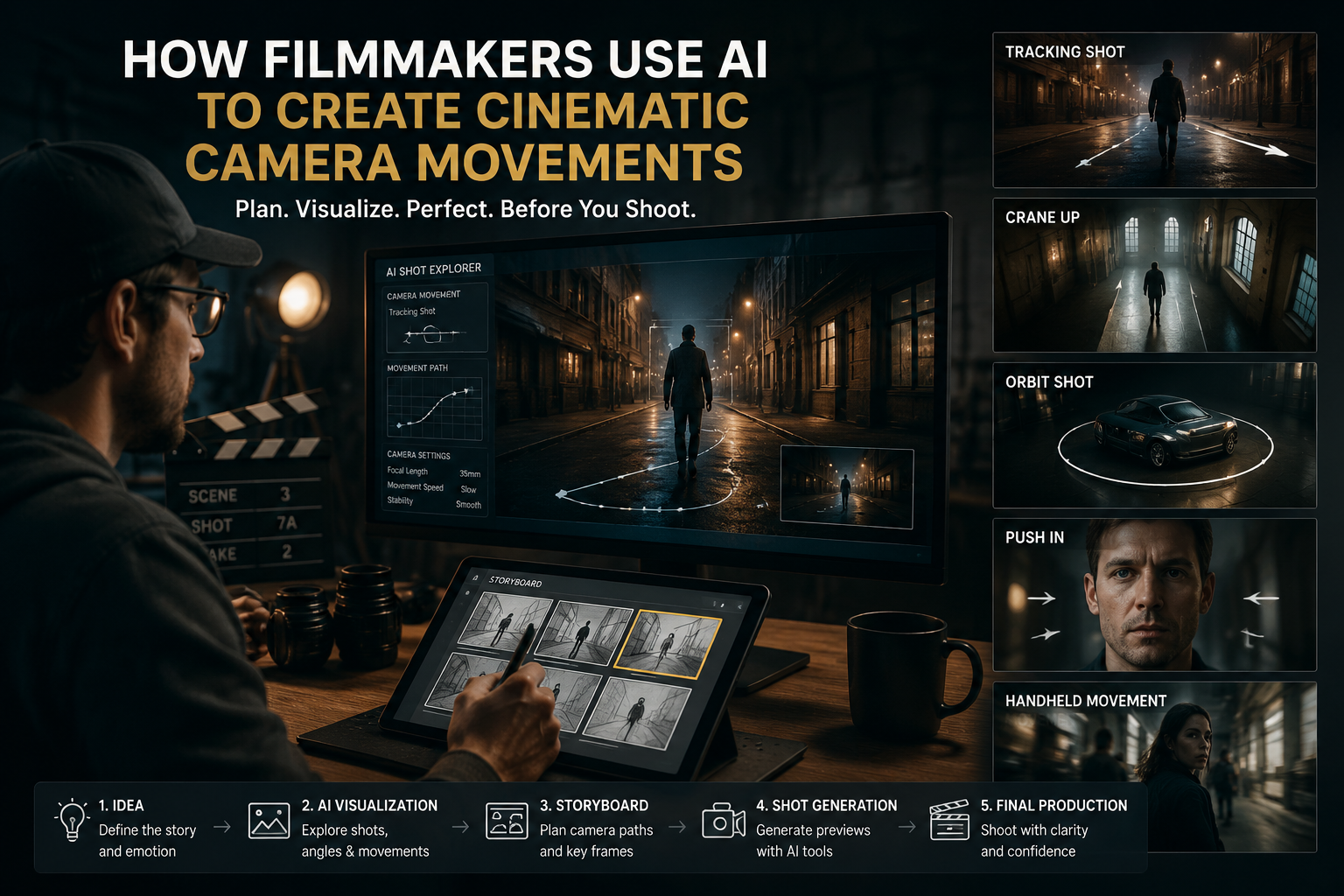
This allows filmmakers to explore movements such as:
Tracking Shots
Tracking shots follow a subject through a scene and are commonly used to create a sense of movement or progression.
AI can help filmmakers visualize how a character, vehicle, or product might move through an environment before committing to a final production approach.
Camera Rotations and Orbit Shots
Orbit movements are often used in product films, character introductions, and cinematic reveals.
AI-generated previews can help creators explore how a subject might look from different angles while maintaining the overall composition.
Push-In and Pull-Out Movements
Slow camera movements toward or away from a subject can create emotional impact.
AI tools help filmmakers test how these movements affect storytelling before production.
Maintaining Continuity Across Cinematic Shots
Camera movement is closely connected with scene continuity.
A film may include multiple shots captured from different angles, but they still need to feel like they belong to the same world.
AI workflows can help filmmakers maintain consistency across:
- Character positions
- Lighting conditions
- Environment details
- Camera style
- Visual tone
This is especially useful for projects involving multiple scenes, virtual production, or AI-generated footage.
For example, a science fiction film may require the same futuristic environment to appear across several shots. Maintaining consistent camera direction and visual details helps create a believable world.
AI and Virtual Camera Exploration
Virtual cameras are becoming increasingly important in modern filmmaking. They allow creators to explore digital environments and experiment with shots before traditional filming begins.
AI can support virtual camera workflows by helping filmmakers test:
- Camera placement
- Movement speed
- Scene blocking
- Composition
This is valuable for complex productions where planning camera movements in advance can save significant time.
A director working on a large environment scene can explore different camera paths before building the final sequence.
Combining Cinematography Skills With AI Tools
AI does not replace the role of cinematographers. The creative decisions behind camera movement still come from human understanding of storytelling, emotion, and visual language.
A filmmaker still needs to decide:
- Why the camera should move
- What the audience should focus on
- How movement supports the story
- What feeling the shot should create
AI works best as a creative assistant that helps filmmakers visualize options and refine decisions.
The strongest results come when traditional filmmaking knowledge is combined with AI-powered experimentation.
The Future of AI-Assisted Cinematic Camera Work
As AI video technology improves, filmmakers will have more control over planning and experimenting with cinematic movement.
Future workflows will make it easier to test complex camera ideas, explore virtual environments, and create detailed shot plans before production begins.
This will be especially valuable for independent filmmakers and smaller creative teams that want to achieve cinematic results without large production resources.
AI will not change the importance of cinematography. Instead, it will give filmmakers more tools to explore their vision and make stronger creative decisions.
Final Thoughts
Cinematic camera movement has always been about more than moving a camera. It is about guiding emotion, creating perspective, and supporting the story.
AI tools are helping filmmakers approach camera planning in new ways by making it easier to visualize shots, test movements, and develop stronger visual concepts before filming.
From pre-production planning to virtual camera exploration, AI-assisted workflows are giving filmmakers more creative flexibility while keeping storytelling at the center of the process.