Table of Contents
ToggleModern filmmaking is built on collaboration between multiple creative departments. A single film may involve writers, directors, cinematographers, editors, production designers, sound teams, and visual effects artists, all working together to bring one vision to life.
As projects become more ambitious, managing these different elements becomes increasingly difficult. A change in the script can affect visuals, character development, camera decisions, editing, and post-production. Keeping every department aligned requires strong communication and careful planning.
AI agents are changing how filmmakers manage these complex workflows. Instead of using AI only for individual tasks, creators can now use AI systems that support connected production processes, helping manage ideas, references, creative decisions, and production requirements throughout a project.
With multi-agent workflows becoming more advanced, filmmakers can also use specialized AI agents for different areas of production, allowing creative teams to handle larger projects while maintaining control over the final vision.
Why Complex Video Projects Are Difficult to Manage
The difficulty of filmmaking is not only in creating individual scenes. It is in ensuring every scene works together as part of a larger story.
A feature film, series, or commercial may require hundreds of connected decisions:
- How characters should look across scenes
- How locations should maintain visual continuity
- How camera movements support the story
- How visual effects fit into the environment
- How editing choices affect the final narrative
When these elements are managed separately, maintaining consistency becomes challenging.
AI agents help by creating workflows where information, references, and creative decisions can remain connected throughout production.
From Single AI Tools to AI-Assisted Production Workflows
Earlier AI tools were often designed to complete one specific task. A tool might help create an image, generate a video clip, or assist with editing.
AI agents work differently because they are designed to understand broader goals and support multiple connected activities.
For filmmakers, this means AI can assist with different stages of production rather than only helping with isolated tasks.
A filmmaker can use AI-assisted workflows to move from an initial idea into:
- Story development
- Scene planning
- Visual exploration
- Shot preparation
- Content creation
- Editing refinement
This creates a more connected production process where creative decisions are easier to manage.
The Role of Multi-Agent Workflows in Filmmaking
Large productions require specialized expertise. A cinematographer thinks about camera language, a production designer focuses on environments, and an editor shapes the final storytelling rhythm.
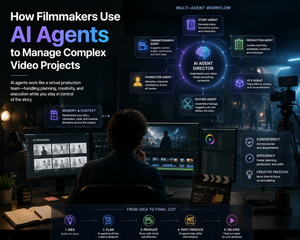
Multi-agent AI workflows follow a similar approach by allowing different AI agents to support specialized creative roles.
Instead of one AI system handling every task, multiple agents can collaborate, with each focusing on a specific part of production.
For example, a filmmaking workflow may include:
- A story agent helping develop narrative structure
- A storyboard agent helping visualize scenes
- A cinematography agent supporting camera planning
- A character agent maintaining character details
- A VFX agent assisting with visual effects concepts
- An editing agent supporting post-production decisions
These specialized agents can work together while staying aligned with the overall creative direction.
This approach is especially valuable for complex projects where multiple creative elements need to remain connected.
AI Agents in Pre-Production Planning
Pre-production is where many important creative decisions are made. Directors and production teams spend significant time planning scenes before cameras start rolling.
AI agents can support this stage by helping filmmakers organize ideas, explore possibilities, and create clearer production plans.
For example, a director preparing a fantasy film may need to define:
- Character appearances
- World-building details
- Camera approaches
- Scene layouts
- Visual style
AI-assisted workflows can help transform these early ideas into structured creative plans.
This allows filmmakers to experiment with different approaches before committing resources to production.
Maintaining Continuity Across Complex Projects
One of the biggest challenges in filmmaking is maintaining consistency.
A character appearing in multiple scenes needs to look the same. A location shown from different angles needs to feel like the same place. Visual style, lighting, and camera language need to remain connected.
AI agents can support this by maintaining project context and remembering important creative decisions.
For example, a filmmaker working on a series may need a recurring digital character to maintain the same appearance, clothing style, and personality across multiple episodes.
By keeping references and decisions connected, AI-assisted workflows can reduce inconsistencies during production.
AI Agents for Shot Planning and Visual Direction
Directors often create shot lists, references, and visual plans before filming begins. These materials help communicate the creative vision to the entire production team.
AI agents can support this process by helping filmmakers explore different ways to approach a scene.
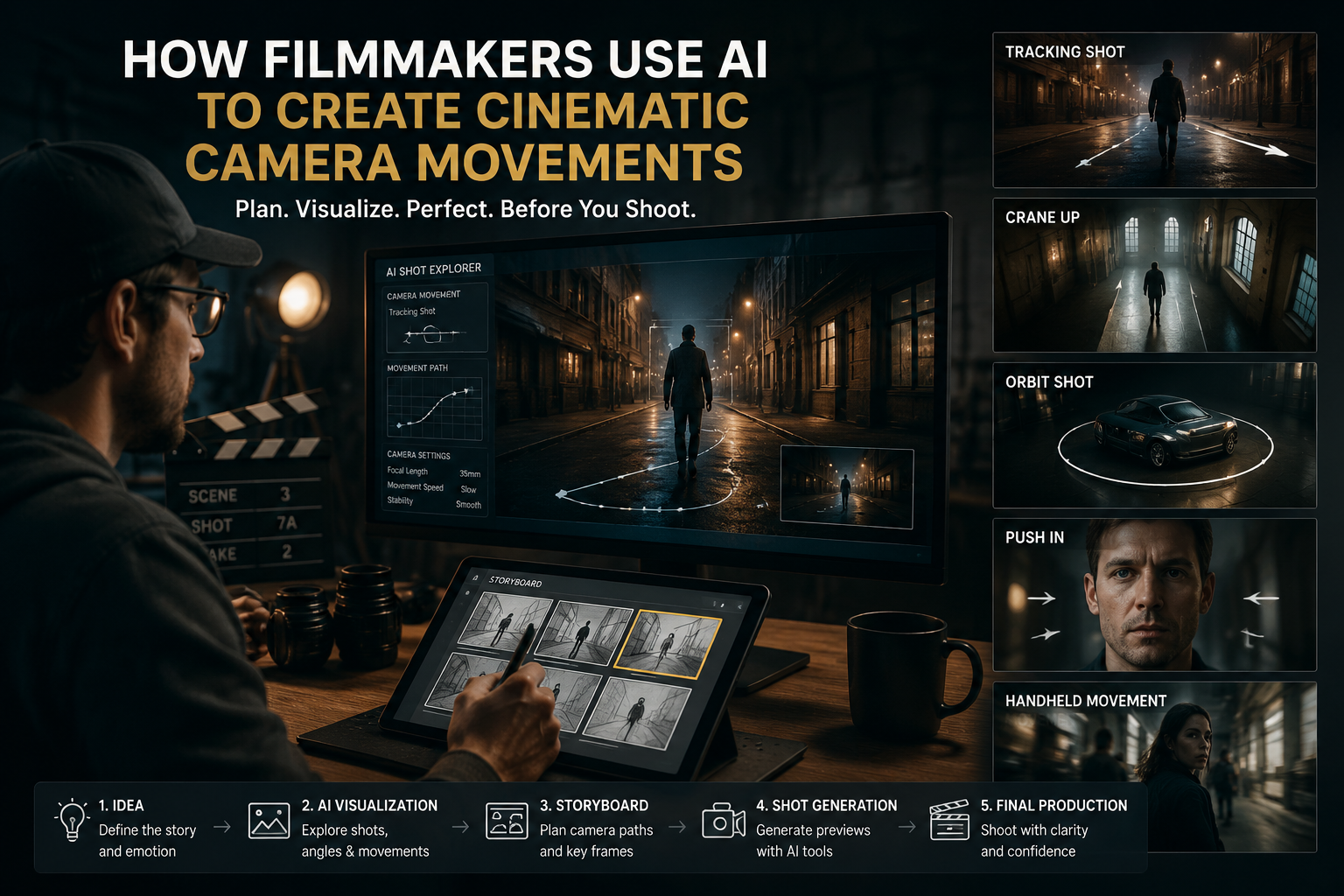
A director planning an action sequence, for example, can test different camera movements, compositions, and scene structures before production begins.
This type of AI-assisted planning helps filmmakers make creative decisions earlier and gives teams a clearer understanding of the final result.
Connecting Creative Production Workflows
As filmmaking workflows become more complex, creators need tools that connect different production stages rather than treating them separately.
Agent-based video workflows are helping filmmakers move from ideas and references into structured projects where planning, visual development, generation, editing, and refinement remain connected.
For example, workflows supported by platforms such as invideo Agent allow creators to develop videos from scripts, concepts, and references while keeping creative decisions connected across different stages of production.
This approach is useful for multi-scene projects where filmmakers need consistency in characters, visual style, storytelling direction, and overall production quality.
As these workflows expand, systems such as invideo Agent Two are designed to support larger creative processes by coordinating areas such as cinematography, story development, visual planning, and effects. This helps teams manage more complex projects without losing alignment between different creative elements.
Supporting Independent Filmmakers With Limited Resources
AI agents are not only useful for large studios. Independent filmmakers can also benefit from these workflows.
Smaller teams often need to manage multiple responsibilities at once. A filmmaker may handle writing, directing, planning, editing, and production coordination without access to specialists in every department.
AI agents can help fill some of these gaps by providing support across different creative areas.
An independent filmmaker creating a short film can use AI assistance to explore visual concepts, organize production ideas, plan scenes, and refine creative choices.
This allows smaller teams to experiment with more ambitious ideas while working within limited resources.
AI Agents in Post-Production
Post-production involves another layer of complexity. Editors, sound designers, and VFX teams need to transform raw material into a finished story.
AI agents can support this stage by helping organize assets, analyze footage, suggest edits, and assist with visual improvements.
For example, AI-assisted workflows can help teams review footage faster, identify important moments, and maintain consistency between the original creative direction and the final edit.
This reduces repetitive work and allows creators to focus more on storytelling decisions.
The Future of AI Agents in Filmmaking
AI agents are moving filmmaking toward a more collaborative relationship between humans and technology.
Future production workflows may involve teams of specialized AI agents working alongside filmmakers, supporting everything from story development to final editing.
However, creative vision will continue to come from human creators. Directors and filmmakers will still make decisions about emotion, storytelling, and artistic direction.
The role of AI agents will be to reduce complexity, improve efficiency, and help creators bring bigger ideas to life.
Final Thoughts
Managing complex video projects requires coordination between many creative decisions and production stages. AI agents are helping filmmakers create more connected workflows by supporting planning, production, and refinement.
With multi-agent systems, different AI assistants can support specialized areas of filmmaking while working toward the same creative goal.
The future of filmmaking will not be about replacing creative teams. It will be about giving filmmakers more powerful tools to manage complexity, maintain consistency, and create stories that were once difficult to produce.