Table of Contents
ToggleCreating a video with AI has become significantly easier, but producing an entire story that feels connected from beginning to end remains one of the biggest challenges. Generating a single impressive scene is no longer the main difficulty. The real challenge is maintaining consistency across multiple scenes, characters, locations, visual styles, and creative decisions.
In traditional filmmaking, directors and production teams rely on detailed notes, continuity supervisors, mood boards, character sheets, and production documents to make sure every department follows the same creative direction. A character’s appearance, camera style, lighting approach, and world-building choices are carefully tracked throughout production.
AI filmmaking faces a similar challenge. Without proper context, AI systems may treat every generation as a new request. A character may look slightly different, a location may change unexpectedly, or the visual style may shift between scenes.
This is where memory becomes increasingly important in AI filmmaking. By remembering project details, references, and creative choices, AI workflows can help filmmakers create videos that feel like one complete production rather than a collection of unrelated clips.
Why Consistency Is Difficult in AI Filmmaking
AI video generation has made it possible to create realistic scenes from simple ideas, but maintaining continuity across a longer project requires more than generating high-quality visuals.
A filmmaker creating a short film, commercial, or series may need to manage dozens of creative elements at once. The same character may appear in multiple locations, the same environment may need to be shown from different angles, and the visual style needs to remain consistent throughout the story.
Without a system that remembers these decisions, creators often need to repeat the same instructions for every scene. This can become time-consuming and increase the chance of inconsistencies.
Project memory helps solve this problem by allowing AI workflows to retain important information and apply it throughout the creative process.
What Is Project Memory in AI Filmmaking?
Project memory refers to the ability of an AI filmmaking system to retain important information about an ongoing project instead of treating every task as a separate request.
Rather than starting from zero each time, the AI can understand previous creative decisions and use them when creating new scenes.
This memory can include details such as:
- Character appearance and personality
- Location details
- Visual style
- Camera preferences
- Lighting direction
- Story elements
- Brand guidelines
- Previous creative choices
For filmmakers, this creates a more connected production process where every new scene builds on what came before.
How Memory Helps Maintain Character Consistency
Characters are one of the most important elements of storytelling. Whether it is a film protagonist, a digital actor, or a brand character, audiences need to recognize the same identity throughout the video. This is where character continuity becomes essential, ensuring that a character’s appearance, personality, and visual identity remain consistent across every scene.
Without memory, AI-generated characters can experience changes in:
- Facial features
- Clothing
- Hairstyle
- Age
- Body structure
- Expressions
These inconsistencies can quickly break immersion and make the character feel disconnected from the story.
AI workflows with memory can help maintain character references across scenes, allowing creators to build characters that remain visually recognizable throughout a project. This makes character continuity easier to manage, especially when developing long-form stories, commercial campaigns, or content where the same character appears repeatedly.
This is especially useful for AI films, commercials, episodic content, and campaigns where the same character appears repeatedly.
The Importance of References in AI Video Creation
References play an important role in controlling creative output.
A filmmaker may provide visual references for:
- Character design
- Locations
- Product appearance
- Lighting style
- Camera composition
- Overall mood
These references help establish the visual language of a project.
For example, a director may want every scene in a film to have a cinematic look with warm lighting and a specific color palette. Without references, different scenes may develop inconsistent styles.
When AI systems can understand and use references throughout a project, creators gain more control over the final output.
Keeping Visual Style Consistent Across Scenes
Every film has a visual identity.
A science fiction film may use cold colors, dramatic lighting, and wide cinematic shots. A lifestyle commercial may use natural lighting, soft colors, and realistic environments.
Maintaining this style across multiple scenes is essential for creating a professional result.
AI memory helps preserve decisions related to:
- Color grading
- Lighting approach
- Camera language
- Scene composition
- Visual tone
This allows filmmakers to create a stronger connection between individual shots and the overall story.
How Creative Decisions Shape AI-Generated Videos
Filmmaking involves hundreds of creative decisions that influence the final result.
A director may decide that a character should always appear confident, that a location should feel mysterious, or that every shot should have a specific cinematic quality.
These decisions are not always visible in a single prompt, but they define the identity of the project.
AI filmmaking workflows that maintain context can help preserve these choices throughout production.
This allows creators to spend less time repeating instructions and more time refining the story and creative direction.
AI Agents Are Bringing Memory Into Video Workflows
As AI filmmaking evolves, creators are moving from simple generation tools toward more intelligent workflows that understand the broader context of a project.
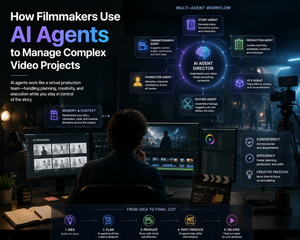
Invideo Agent helps creators approach video production as a connected process rather than a series of separate generations. It can support the journey from idea development and scripting to visual creation, editing, and refinement while keeping the creative direction connected throughout the project.
This is particularly valuable for filmmakers and brands working on multi-scene videos where characters, environments, and visual styles need to remain aligned.
How Invideo Agent Two Supports Complex Creative Projects
As projects become larger, maintaining consistency across multiple creative elements becomes more challenging.
Invideo Agent Two builds on this workflow by helping teams manage more complex productions where different creative roles and decisions need to work together. It can support areas such as story planning, cinematography, visual development, and effects while helping teams maintain a shared understanding of the project’s direction.
For filmmakers working on larger stories, this type of connected workflow can make it easier to manage continuity across multiple scenes and production stages.
Memory Helps Brands Create Consistent Marketing Videos
Consistency is not only important for filmmakers. Brands also benefit from AI systems that understand ongoing creative direction.
A company creating a series of advertisements may need the same product appearance, spokesperson, visual style, and messaging across dozens of videos.
Without consistency, campaigns can feel disconnected.
AI memory can help brands maintain:
- Product details
- Brand identity
- Campaign themes
- Character appearances
- Visual guidelines
This allows marketing teams to create more content while keeping every video aligned with the original campaign vision.
The Future of AI Filmmaking Will Depend on Context
The next stage of AI filmmaking is not only about creating better visuals. It is about creating systems that understand the entire creative process.
Future AI workflows will need to understand:
- Why a creative decision was made
- How one scene connects to another
- Which elements must remain consistent
- How the overall story should evolve
Memory will become one of the most important parts of AI filmmaking because it allows technology to move from generating individual clips to helping create complete productions.
Human Creativity Remains the Foundation
Although memory-powered AI workflows can improve consistency, human creativity remains essential.
Filmmakers still decide:
- What story do they want to tell
- How characters should feel
- What emotions should a scene create
- Which visual choices support the narrative
AI helps preserve and execute these decisions, but the creative vision still comes from the filmmaker.
The strongest results come from combining human storytelling with AI systems that can understand and support the creative process.
Final Thoughts
Consistency has always been one of the biggest challenges in filmmaking. From character continuity to visual style and production design, every element needs to work together to create a believable world.
AI memory is helping solve this challenge by allowing creative tools to remember references, understand previous decisions, and maintain continuity across an entire project.
As AI filmmaking continues to develop, the future will not simply be about generating individual scenes faster. It will be about building intelligent creative workflows that understand the story, remember the vision, and help filmmakers bring complete worlds to life.